



The real estate sector is changing rapidly due to changing technology and market demands. Technology, sustainability, and changing lifestyles are forcing construction professionals and developers to rethink the way they design, build, and manage properties. Today’s buyers and tenants don’t just look at location and price. People want comfort, flexibility, energy efficiency, and smart control in their living and working spaces.
This shift has led to the rise of smart building real estate, where technology plays a crucial role in daily life. Simultaneously, flexible living spaces and modular designs are gaining popularity, as people seek homes and offices that can adapt to their changing needs. Overall, the combination of IoT systems and modular construction is rapidly transforming the future of real estate.
The Rise of Smart Buildings in Modern Real Estate
Today, smart building real estate technology is becoming commonplace in residential, commercial, and mixed-use real estate developments. These properties use connected devices and intelligent systems to manage lighting, security, energy consumption, and maintenance.
The biggest advantage of smart building real estate is that construction costs are significantly reduced, and property owners can manage their properties much more efficiently and save money through preventive maintenance. Tenants also benefit from increased convenience, which makes smart properties highly attractive in a competitive market.
Learn more about smart building concepts from IBM’s overview of intelligent buildings: https://www.ibm.com/topics/smart-buildings
Understanding IoT in Property Management
The main component of smart properties is the Internet of Things (IoT). IoT in property management refers to the use of connected devices that collect and share data to improve building operations. These devices include smart thermostats, water leak detectors, security cameras, and access control systems.
With IoT in property management, facility managers can monitor buildings remotely. If a pipe leaks or equipment malfunctions, alerts are sent immediately, allowing for quick action and preventing potential damage. Data collected over time can help owners upgrade plans and increase efficiency.
Another advantage of IoT in property management is an improved tenant experience. Smart access systems, app-based controls, and automated services make daily life easier. Whether it’s adjusting the room temperature, tenants enjoy greater control.
For a deeper understanding of IoT use cases in real estate, check this guide by Deloitte:
https://www2.deloitte.com/global/en/pages/technology/articles/iot-in-real-estate.html
Modular Real Estate Development: Building Smarter and Faster
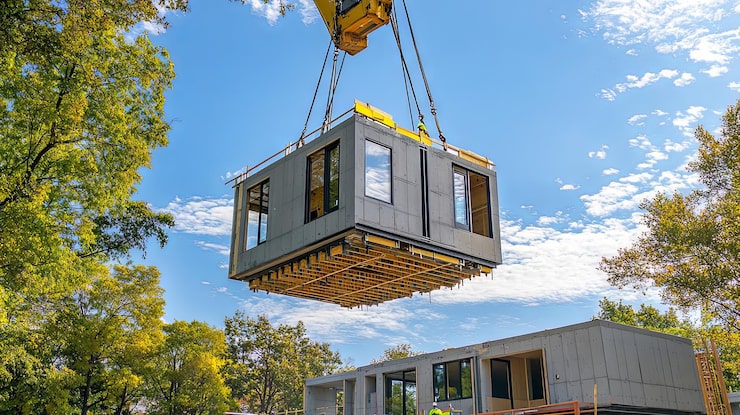
Construction methods are also changing. In modular real estate development, property components are built off-site in a controlled environment, such as a factory, and then brought to the site and assembled. This method reduces construction time, waste, and labour costs.
In modular real estate development, quality control is more robust because the components are manufactured to strict standards. Delays due to weather are minimised, and projects are completed faster than traditional construction. This makes modular methods ideal for housing projects, offices, hotels, and student accommodation.
Another feature of modular real estate development is flexibility in design. Units can be added, removed, or reconfigured to meet future needs. This adaptability enables long-term use and reduces the need for demolition, thereby supporting sustainability goals.
You can explore modular construction benefits through the World Economic Forum:
https://www.weforum.org/topics/modular-construction
The Demand for Flexible Living Spaces
Nowadays, lifestyles are changing rapidly. Remote work, hybrid offices, and multi-purpose homes are becoming commonplace. This has increased the demand for flexible living spaces that can serve more than one purpose.
A living room can become a workspace during the day. A bedroom can be converted into a study area. Flexible living spaces allow users to adjust the layout without major changes. Movable walls, foldable furniture, and modular rooms make this possible.
Flexible living spaces are especially useful in urban areas where space is limited. They help maximise utility while maintaining comfort. Developers who focus on flexibility can attract more buyers, from young professionals to growing families.
These adjustable layouts also work well with smart technology. When combined with automation, flexible spaces become more efficient and user-friendly.
PropTech Sustainability: Technology for a Greener Future
Environmental responsibility has become a key focus for modern real estate development and property management. Proptech sustainability focuses on using technology to reduce environmental impact while improving performance. Smart energy systems, water management tools, and green materials are key components of this approach.
Through proptech sustainability, buildings use less energy and produce fewer emissions. Smart meters track usage patterns, while automated systems reduce waste. Over time, this reduces operating costs and supports environmental goals.
Governments and investors are also supporting proptech sustainability initiatives. Green buildings often receive tax benefits, higher valuations, and greater market demand. Sustainable properties are no longer optional; they are becoming a standard expectation.
For insights into sustainable property technology, visit the U.S. Green Building Council:
https://www.usgbc.org/leed
How IoT and Modular Design Work Together
The real power is in combining IoT systems with modular construction. Smart sensors and wiring can be pre-installed during modular real estate development, making on-site setup faster and cleaner. This improves integration quality and reduces errors.
IoT in property management becomes more effective when modular units are equipped with smart systems from the start. Maintenance, energy tracking, and space usage can be managed centrally. This is especially useful for large housing projects or commercial campuses. This combination also supports flexible living spaces. Modular units can be reconfigured, while IoT systems automatically adjust settings like lighting and temperature. The result is a property that changes according to the user’s needs.
Benefits for Developers, Owners, and Occupants
For developers, smart and modular approaches reduce construction risks and increase project speed. Smart building real estate is increasing in demand and providing better returns. Faster delivery means faster revenue generation.
Property owners benefit from IoT in property management through reduced maintenance costs and increased property value. Predictive maintenance can avoid major repairs, and energy savings increase profitability. Residents enjoy comfort, security, and flexibility. Flexible living spaces and smart controls provide a better quality of life. Sustainable features are in line with growing environmental awareness, reinforcing the goals of proptech sustainability.
Challenges and the Road Ahead
While the benefits are enormous, challenges still exist. Initial costs, technical skills, and data security concerns need to be considered. However, as the technology matures, costs are decreasing and the number of adopters is increasing.
The future of smart building real estate will focus on deep integration, artificial intelligence, and data-driven decisions. Modular real estate development will continue to grow as cities look for faster and greener construction methods. As real estate adapts to modern needs, proptech sustainability, IoT, and flexibility will define successful projects. Developers who invest early in these trends will lead the market in the coming years.
Conclusion
The real estate industry is entering a new era due to technology and changing lifestyles. IoT-powered smart buildings and IoT in property management are improving efficiency and user experience. Additionally, modular real estate development and flexible living spaces are shaping how properties will be designed and used. When combined with proptech sustainability, these innovations create smarter, greener, and more adjustable spaces. As demand continues to grow, adapting to these trends is no longer optional—it is essential for the future of smart building real estate.